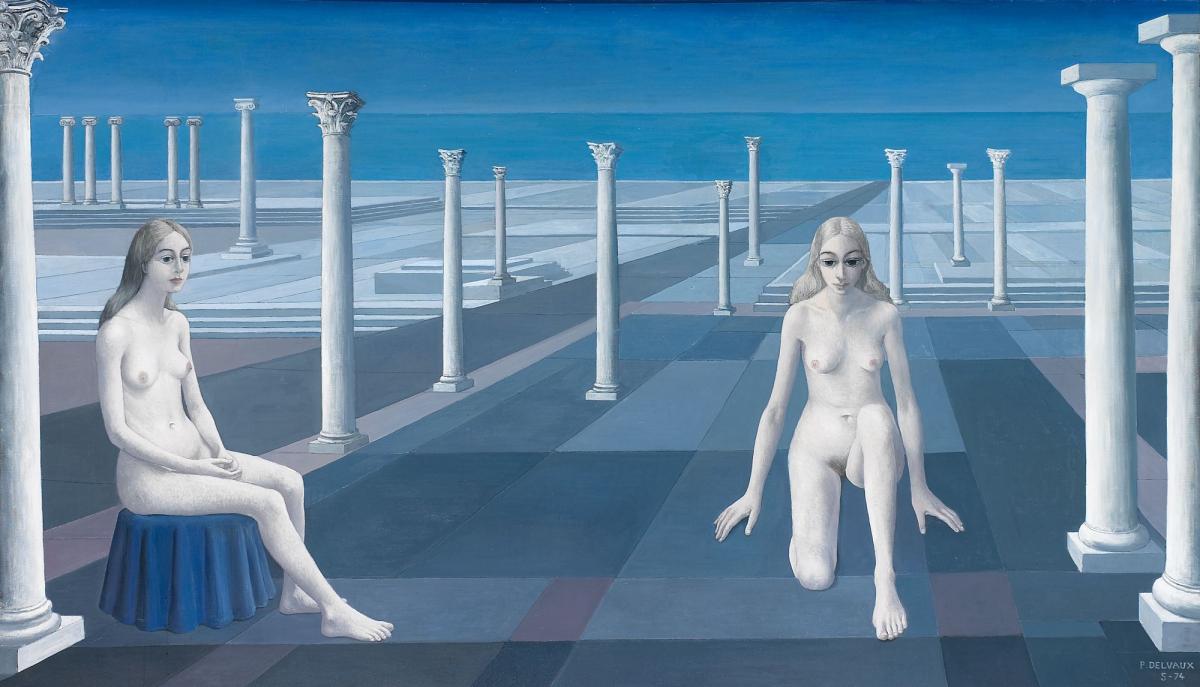
The painting is emblematic of Paul Delvaux’s world: almost disembodied nude women; ancient ruins; and a cool colour palette dominated by blue and white. The scene seems to be taken from a melancholic dream. The Belgian painter’s surrealist world stems from this juxtaposition of elements that are, at first glance, realistic (ancient architecture, female nudes) but which, when brought together, contribute to the scene’s unreality. As with Magritte, the style is classical, almost academic, with the rules of perspective observed, yet the scene depicted reflects the painter’s inner world. The theme of loneliness and the inability to communicate between people is ever-present, despite the somewhat ironic title of the work. Paul Delvaux was influenced by the painter Giorgio de Chirico and his ‘mental theatre’. He would later say that, thanks to the Italian artist, he discovered that painting is, above all, poetry.
This translation has been automatically generated by DeepL.